top of page


A not-so-traditional Thanksgiving
By: Melanie McCabe, PhD The holidays are coming. Instead of joy you feel sad, worried, angry, or a mix of those. You might not even feel anything at all. It makes sense! Here we are, months into a pandemic and we are still learning what the new normal is for us all. The new normal shifts every few weeks. I have spoken with families from all walks of life and three things are common to them all. They want this to end, they are suffering, and they want a taste of n
4 min read


Unmotivated child? We might be able to help.
In many of my first meetings with parents, I am likely to hear the phrase, "Nothing motivates my child." Parents sometimes feel there is nothing that they can use to motivate their child to do the things that they want them to do. This is a source of frustration for the parents. This is the case for most families that I work with, with kiddos from age 5 through college age. Some of the things parents want me to help motivate their children to do include things such as brushin
2 min read


Understanding Codependency
Mental illness is not contagious. Sufferers need not wear a breathing mask, and they won’t spread their illness by sneezing on a handrail or sharing a mug. But at the same time, depression, addiction, anxiety, and other issues do not exist in a vacuum. Those who interact regularly and intimately with the sufferer can experience an issue of their own: codependency. It’s not guaranteed – thousands of families with mentally ill members function normally – but in certain situati
2 min read


The Long-Term Effects of Child Abuse
Child abuse is a difficult, complex, and frequently studied subject. Its prevalence in society is disturbing; in 2014, the National Children’s Alliance estimates that 704,000 American children suffered some form of abuse. Child abuse may be physical, sexual, emotional, or come from neglect. Often these abuses occur together, or may cross several categories. All abuse can profoundly affect children when they become adults: it changes how they process love, how they deal with s
2 min read


The Mental Health Benefits of Journaling
Most of us stopped keeping a regular journal in grade school. As we grew older, many of the secrets we confessed to our diaries were instead whispered to friends. But could the urge to write down our thoughts be as helpful to adults as it is for kids? Experts say yes. If you're hoping to process your emotions and monitor your habits, going back to pen and paper can be surprisingly valuable. Wordsworth said that poetry is a “spontaneous overflow of emotion, recollected in tran
2 min read


Cary Mental Health Practice Welcomes Aja Cann, LCSW, LCAS
Cary Mental Health Practice Welcomes New Clinician Aja Cann Provides Mental Health Services to All Ages CARY, N.C. — 3-C Family Services, PA, a local research-based clinical practice of psychology, psychiatry, and counseling professionals, has announced the addition of Aja Cann, LCSW, LCAS to its team of distinguished clinicians. Ms. Cann received her undergraduate degree in psychology from the University of North Carolina at Wilmington in 2005. She earned her Master of Socia
2 min read


Mental Health Resources for College Students
College is an important, exciting, and confusing time. At the intersection of adolescence and adulthood, people who recently needed permission to use the toilet are now forced to make life-altering decisions. Coupled with social temptations and increasing student debt, it’s enough to unseat even the sturdiest person. Thankfully, college students are not alone. Universities, the government, and students themselves have built a valuable network of resources. If you’re a college
2 min read


Understanding Seasonal Affective Disorder
It’s easy to get the blues in the winter. The gloomy weather, post-holiday food comas, and post-holiday return to routine can really get you down. But most of us continue on with our daily lives, dreaming of warmer days. For some people though, the winter blues are more than an inconvenience. Seasonal affective disorder (SAD) is a legitimate mental illness where sufferers experience anxiety or depression during a certain season. It may sound too crazy to be true, but it’s a l
2 min read


Test Taking Anxiety
By Melanie McCabe, PhD Testing time has once again arrived. A time of year that requires students from elementary through graduate school to demonstrate the knowledge they have gained. For some, this is a simple task that requires a bit of review, but for others, an assessment can be quite an uncomfortable ordeal. Most people feel some degree of stress before and during evaluations such as tests or presentations. Some stress is needed to find the motivation to study and susta
2 min read


Local Cary Mental Health Practice Adds Mary Miracle, LPC
Local Cary Mental Health Practice Adds New Clinician Mary Miracle Specializes in Helping Children CARY, N.C. — 3-C Family Services, PA, a research-based clinical practice consisting of psychology, psychiatry, and counseling professionals, has announced the addition of Mary Miracle, LPC, to its team of distinguished clinicians. Mrs. Miracle completed her undergraduate degree in psychology and sociology from NC State University. She then earned her master’s degree in rehabilita
2 min read


What Does a Panic Attack Look Like?
Mental health has evolved as both a study and a societal function. We’ve come a long way from lobotomies and two-dimensional characters in straitjackets. Unfortunately, the scars of those misconceptions linger, and as a result, people may not realize when they’re experiencing a legitimate problem. They may dismiss it as a phase, a one-off episode, or as some kind of intangible “craziness.” Because of their numerous symptoms and forms, panic attacks are one of the most misunde
2 min read


Understanding Self-Harm
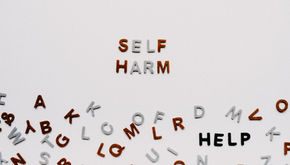
When life is at its most challenging, coping with adversity can be emotional and difficult. Many people resort to self-harm as a way to handle conflict. The reasons for it are complex and varied, and treatment can be a long process. But one thing is clear: it’s not the answer. What is Self-Harm? Self-harm is a coping mechanism in which people purposefully hurt themselves, often becoming a habit whenever emotionally difficult situations arise. Cutting, punching, and scratching
2 min read


The Psychology of Triggers, PTSD, and Mental Illness
The term “trigger” has been a hot topic recently. Take the debate over trigger warnings in academia, alerting students of content that could be harmful to those with mental illnesses. Passion about the issue, combined with a contentious political atmosphere, has made finding the facts difficult. Despite the topic’s popularity, triggers have been around in psychology for a very long time. Today, we’re going to examine triggers and what defines them, in the hopes of clearing th
2 min read


Getting Started With Meditation
When you think of meditation, you might laugh! It conjures pictures of old white yogis or Buddhist monks with loud, constant chants. The reality is much different. At its core, meditation is a way of gaining control of processes your body normally does on its own. It’s a way of turning off auto-pilot and re-centering yourself in the moment. While it sounds rather philosophical, the effects are anything but: lowered heart rate, lowered stress level, and better concentration. N
3 min read


Popular Myths About SSRIs
Selective serotonin reuptake inhibitors (SSRIs), more commonly known as antidepressants, are often misunderstood. Sensationalized stories and stigma of mental health issues have contributed to their sometimes negative reputation. The reality is that like all other medicines, SSRIs require professional guidance to use responsibly. There are a number of cultural myths about them. These myths can hurt patients who could benefit from use of the medications, but are scared away by
2 min read


Internalization vs Externalization
By Melanie McCabe, PhD “Is my child’s behavior typical?” is a question that is often asked when families have concerns about behavior or emotions. A mental health professional can help determine if behaviors and emotions are typical or if the child may need extra support. Emotional and behavioral difficulties can be a typical part of growing up, but based on intensity, frequency, and duration, these difficulties may be outside of the expected range. Figuring out what is typic
2 min read
bottom of page